
Description
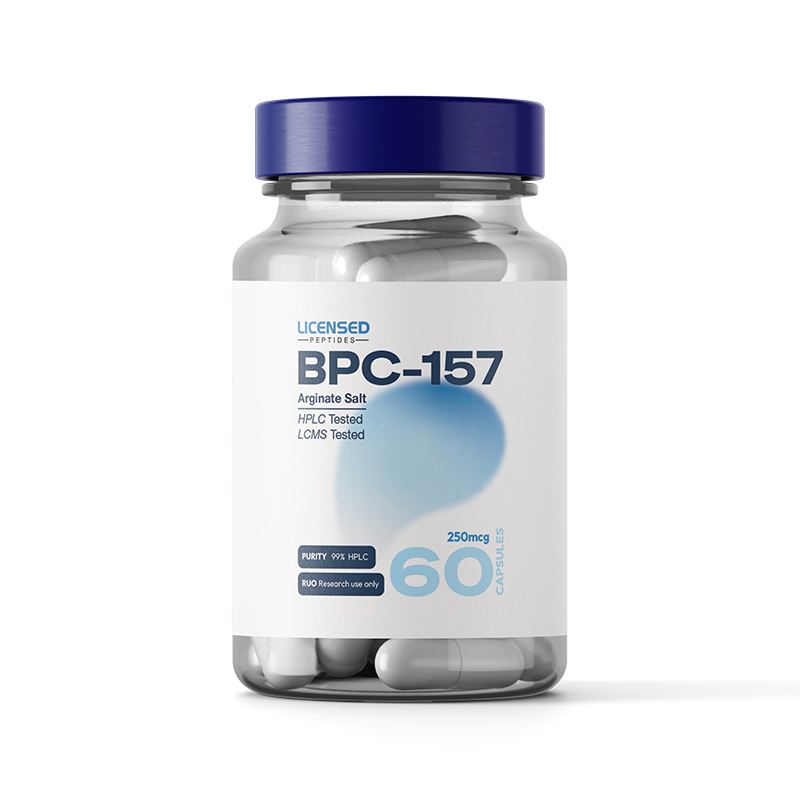
BPC-157 (Body Protection Compound 157) is a pentadecapeptide composed of 15 amino acids, synthetically derived from a protein originally identified in human gastric juice [1][5]. The sequence is noted for its exceptional stability relative to many endogenous peptides, a property that has contributed to its sustained interest as a tool compound in preclinical research contexts [2]. Its structural characteristics allow it to remain active across a range of experimental conditions, making it a practical subject for controlled laboratory investigation.
Researchers first became interested in BPC-157 because of its apparent role in gastric mucosal physiology, and subsequent preclinical work has expanded that focus considerably [3]. Studies in animal models have examined the peptide's involvement in nitric oxide signaling, growth hormone receptor expression, angiogenesis-related pathways, and the modulation of pro-inflammatory cytokines [3][4]. These mechanistic angles have guided a broad range of experimental designs, from gastrointestinal physiology to musculoskeletal tissue modeling.
The compound is primarily investigated in rodent models, where published work has explored its effects across multiple tissue types, including tendon, ligament, skeletal muscle, bone, and gastrointestinal epithelium [2][4]. A 2025 systematic review identified 36 studies published between 1993 and 2024 that documented BPC-157's preclinical activity across musculoskeletal injury models, noting consistent engagement with cell growth and vascular remodeling pathways [3]. Separately, researchers have studied its behavior in wound-healing paradigms, including models of burns, ulceration, and ischemia-reperfusion [4].
BPC-157 continues to be the subject of active patent activity and peer-reviewed investigation, with growing interest in characterizing its full mechanism of action and pleiotropic preclinical profile [1]. Its derivation from a naturally occurring gastric protein and its reported stability under experimental conditions make it a frequently selected candidate for studies involving extracellular matrix regulation and cellular signaling in vitro and in animal models [2][5].
---
References
[1] Multifunctionality and Possible Medical Application of the BPC 157 Peptide-Literature and Patent Review. Pharmaceuticals (Basel, Switzerland), 2025. https://pubmed.ncbi.nlm.nih.gov/40005999/
[2] Gastric pentadecapeptide body protection compound BPC 157 and its role in accelerating musculoskeletal soft tissue healing. Cell and Tissue Research, 2019. https://pubmed.ncbi.nlm.nih.gov/30915550/
[3] Emerging Use of BPC-157 in Orthopaedic Sports Medicine: A Systematic Review. HSS Journal: The Musculoskeletal Journal of Hospital for Special Surgery, 2025. https://pubmed.ncbi.nlm.nih.gov/40756949/
[4] Stable Gastric Pentadecapeptide BPC 157 and Wound Healing. Frontiers in Pharmacology, 2021. https://pubmed.ncbi.nlm.nih.gov/34267654/
[5] BPC-157. Wikipedia. https://en.wikipedia.org/wiki/BPC-157


