Description
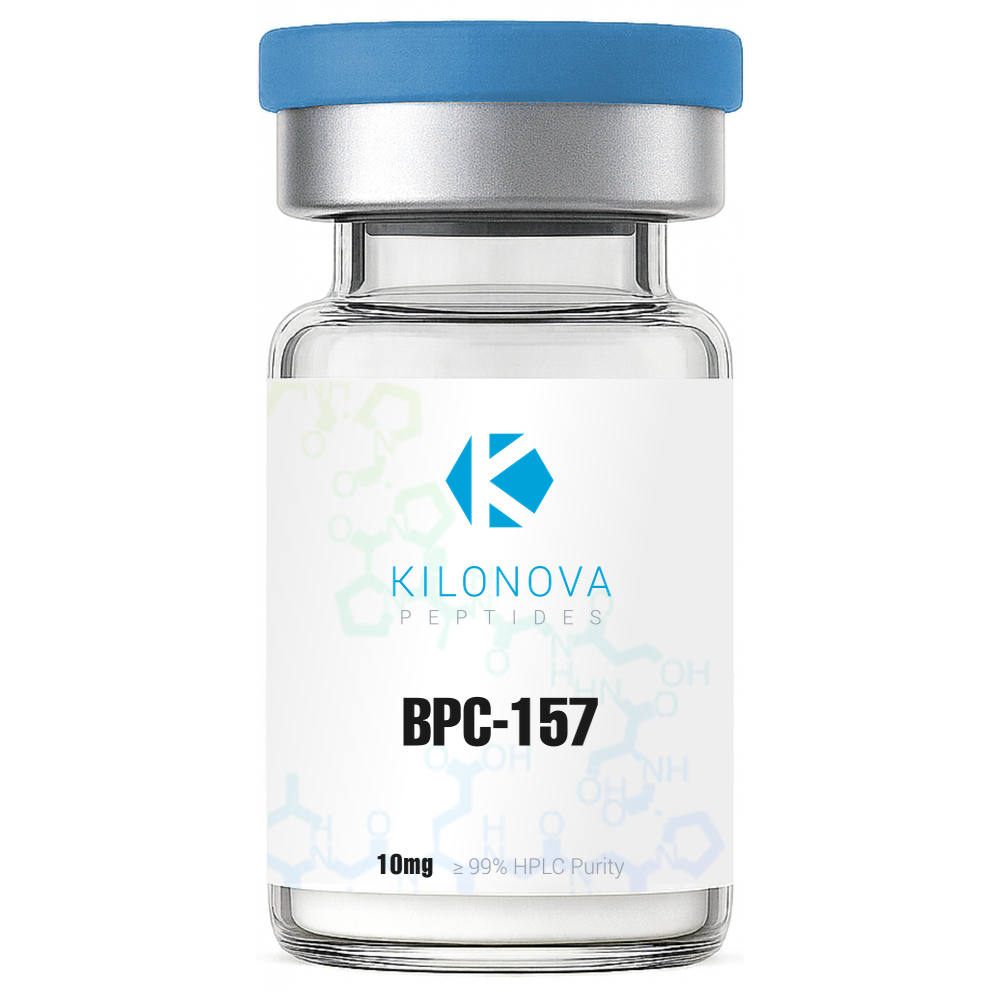
BPC-157 (Body Protection Compound 157) is a synthetic pentadecapeptide consisting of 15 amino acids, with a molecular weight of approximately 1419.56 Da [5]. The sequence was originally derived from a protein isolated from human gastric juice [6], and the compound has since been registered in major chemical databases and subjected to structural characterization [5]. One notable property that has drawn sustained scientific attention is its reported stability under experimental conditions — an attribute relatively uncommon among peptides of similar size [1].
Early interest in BPC-157 centered on gastric and mucosal physiology, but the scope of preclinical investigation has broadened considerably over the past three decades [2]. Researchers have employed it across a wide range of laboratory and animal-model studies examining tissue integrity, wound-response mechanisms, and gastrointestinal homeostasis [3][4]. Its pleiotropic activity profile across multiple experimental systems has made it a subject of ongoing mechanistic inquiry [1].
In musculoskeletal research contexts, laboratory studies have examined BPC-157 in models involving tendon, ligament, muscle, and bone tissue, exploring how the compound interacts with growth factor signaling and inflammatory pathways [2][3]. Separately, wound-healing research has investigated its activity in cutaneous and multi-tissue injury models in rodents, with particular focus on vascular and coagulation-related processes [4]. The breadth of experimental contexts in which BPC-157 has been studied reflects its status as a structurally compact yet biochemically active research tool [1].
References
[1] Multifunctionality and Possible Medical Application of the BPC 157 Peptide-Literature and Patent Review. Pharmaceuticals (Basel, Switzerland), 2025. https://pubmed.ncbi.nlm.nih.gov/40005999/
[2] Emerging Use of BPC-157 in Orthopaedic Sports Medicine: A Systematic Review. HSS Journal: the musculoskeletal journal of Hospital for Special Surgery, 2025. https://pubmed.ncbi.nlm.nih.gov/40756949/
[3] Gastric pentadecapeptide body protection compound BPC 157 and its role in accelerating musculoskeletal soft tissue healing. Cell and Tissue Research, 2019. https://pubmed.ncbi.nlm.nih.gov/30915550/
[4] Stable Gastric Pentadecapeptide BPC 157 and Wound Healing. Frontiers in Pharmacology, 2021. https://pubmed.ncbi.nlm.nih.gov/34267654/
[5] BPC-157 (ChEMBL4297358). ChEMBL, European Bioinformatics Institute. https://www.ebi.ac.uk/chembl/compound_report_card/CHEMBL4297358/
[6] BPC-157. Wikipedia. https://en.wikipedia.org/wiki/BPC-157