Description
The BPC-157 / TB-500 / GHK-Cu blend is a standardized, multi-component research preparation combining three structurally distinct peptides in a single lyophilized vial. BPC-157 is a synthetic pentadecapeptide derived from a sequence found in human gastric juice; TB-500 is a synthetic analogue of the actin-sequestering protein Thymosin Beta-4; and GHK-Cu (glycyl-L-histidyl-L-lysine copper(II)) is a naturally occurring tripeptide-copper complex first isolated from human plasma. Together, the three components span different molecular weight ranges and physicochemical profiles, making the blend a useful tool for investigators studying overlapping biological pathways in a single experimental system.
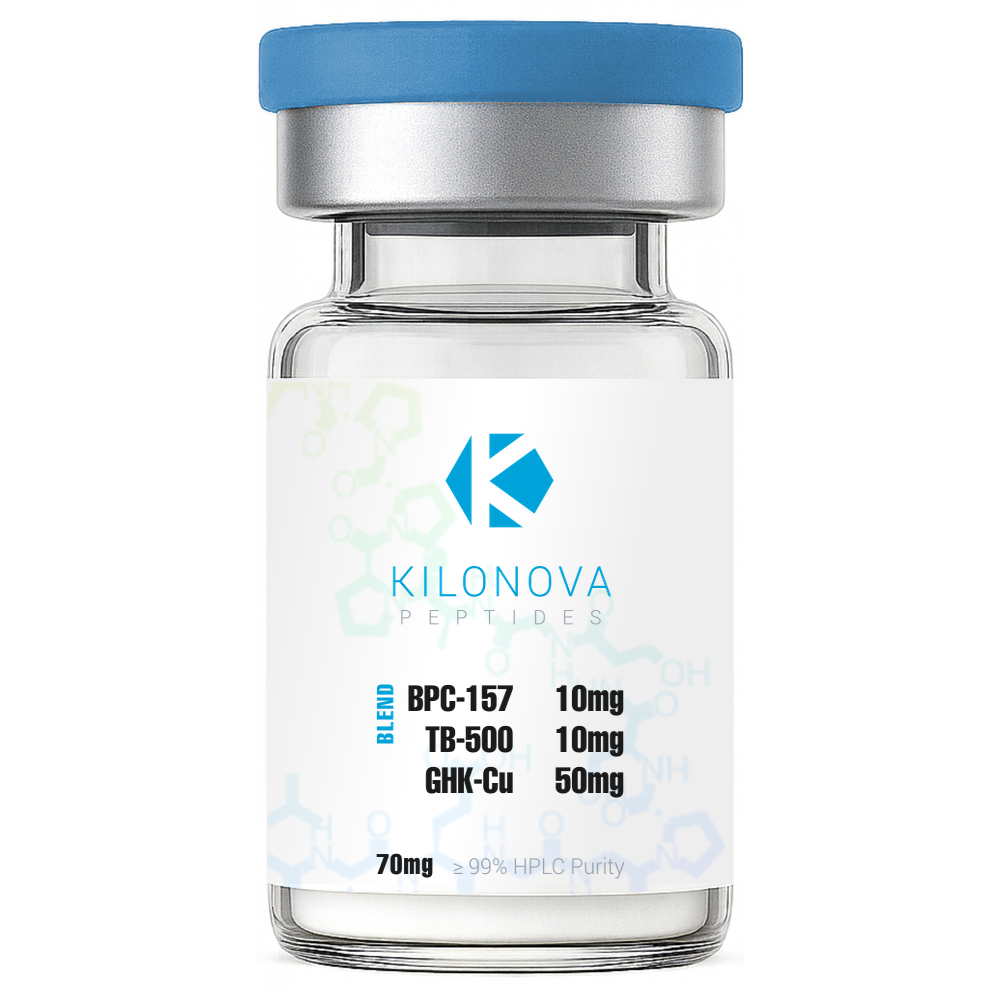
The preparation is formulated at fixed quantities — 10 mg BPC-157, 10 mg TB-500, and 50 mg GHK-Cu — for a combined lyophilized mass of 70 mg per vial. A pre-blended, proportionally fixed format reduces the variability that can arise when researchers independently weigh and combine individual peptides before each experiment, supporting greater consistency across replicate studies. GHK-Cu's copper-chelating character and distinct electrostatic surface properties are understood to contribute to the physicochemical compatibility of the three peptides in the co-lyophilized matrix, allowing them to coexist in a single solid-phase preparation without compromising the integrity of the other components.
Researchers select this blend to probe biological processes in which the three peptides may act on related or complementary pathways. BPC-157 has been studied in preclinical models for its interactions with growth factor signaling and angiogenic cascades. TB-500's actin-binding activity has made it a subject of inquiry in studies examining cell migration and cytoskeletal dynamics. GHK-Cu has attracted attention in investigations of extracellular matrix remodeling, antioxidant enzyme activity, and gene expression regulation. The combined format is particularly relevant for experimental designs that require simultaneous exposure to all three peptides under controlled, reproducible conditions.
References
No external sources were cited in this section.