Description
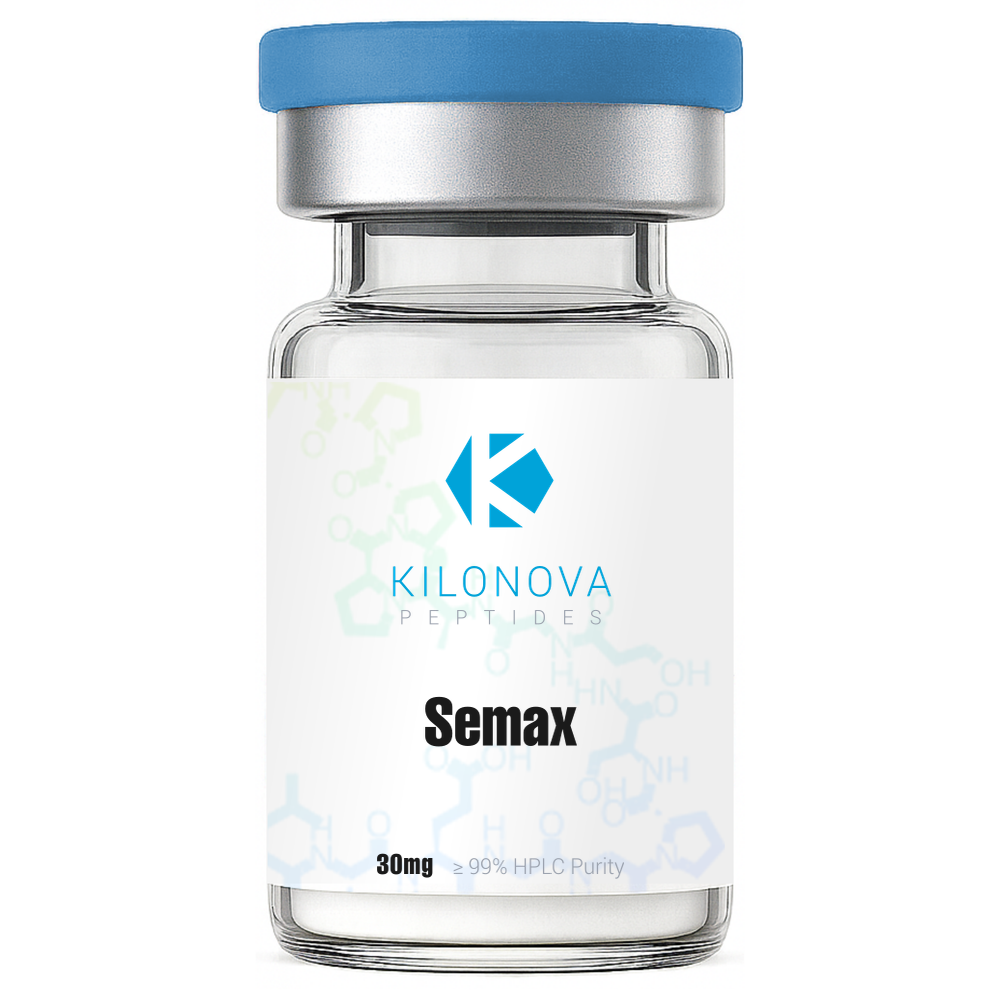
Semax is a synthetic heptapeptide derived from the adrenocorticotropic hormone (ACTH) fragment spanning positions 4 through 7, extended at its C-terminus by a Pro-Gly-Pro tripeptide sequence [3]. This structural design places Semax within the broader class of ACTH-analog peptides, distinguished by modifications that alter its pharmacological profile relative to the parent hormone. The compound is sometimes referenced by the shorthand notation ACTH(4-7)PGP, reflecting its direct sequence origin [4].
Researchers have employed Semax as a tool for investigating neuroplasticity-related signaling, particularly pathways involving brain-derived neurotrophic factor (BDNF) and hepatocyte growth factor/c-Met interactions [1]. Its structural properties have also prompted investigations into receptor-level interactions, including binding at the μ-opioid receptor, which preclinical studies have linked to downstream regulation of deubiquitination enzymes such as USP18 [3].
Beyond receptor pharmacology, Semax has been applied in studies examining whole-brain resting-state functional connectivity, with fMRI-based research mapping its influence on amygdala and dorsolateral prefrontal cortex connectivity in controlled experimental settings [2]. Separately, transcriptomic analyses using RNA sequencing in ischemia models have used the peptide to probe gene expression changes across immune and neurosignaling pathways, including those related to neurogenesis, angiogenesis, and protein kinase activity [4].
---
References
[1] Therapeutic Peptides in Orthopaedics: Applications, Challenges, and Future Directions. Journal of the American Academy of Orthopaedic Surgeons. Global research & reviews, 2026. https://pubmed.ncbi.nlm.nih.gov/41490200/
[2] Functional Connectomic Approach to Studying Selank and Semax Effects. Doklady biological sciences : proceedings of the Academy of Sciences of the USSR, Biological sciences sections, 2020. https://pubmed.ncbi.nlm.nih.gov/32342318/
[3] Semax peptide targets the μ opioid receptor gene Oprm1 to promote deubiquitination and functional recovery after spinal cord injury in female mice. British journal of pharmacology, 2025. https://pubmed.ncbi.nlm.nih.gov/40692165/
[4] ACTH-like Peptides Compensate Rat Brain Gene Expression Profile Disrupted by Ischemia a Day After Experimental Stroke. Biomedicines, 2024. https://pubmed.ncbi.nlm.nih.gov/39767736/