Description
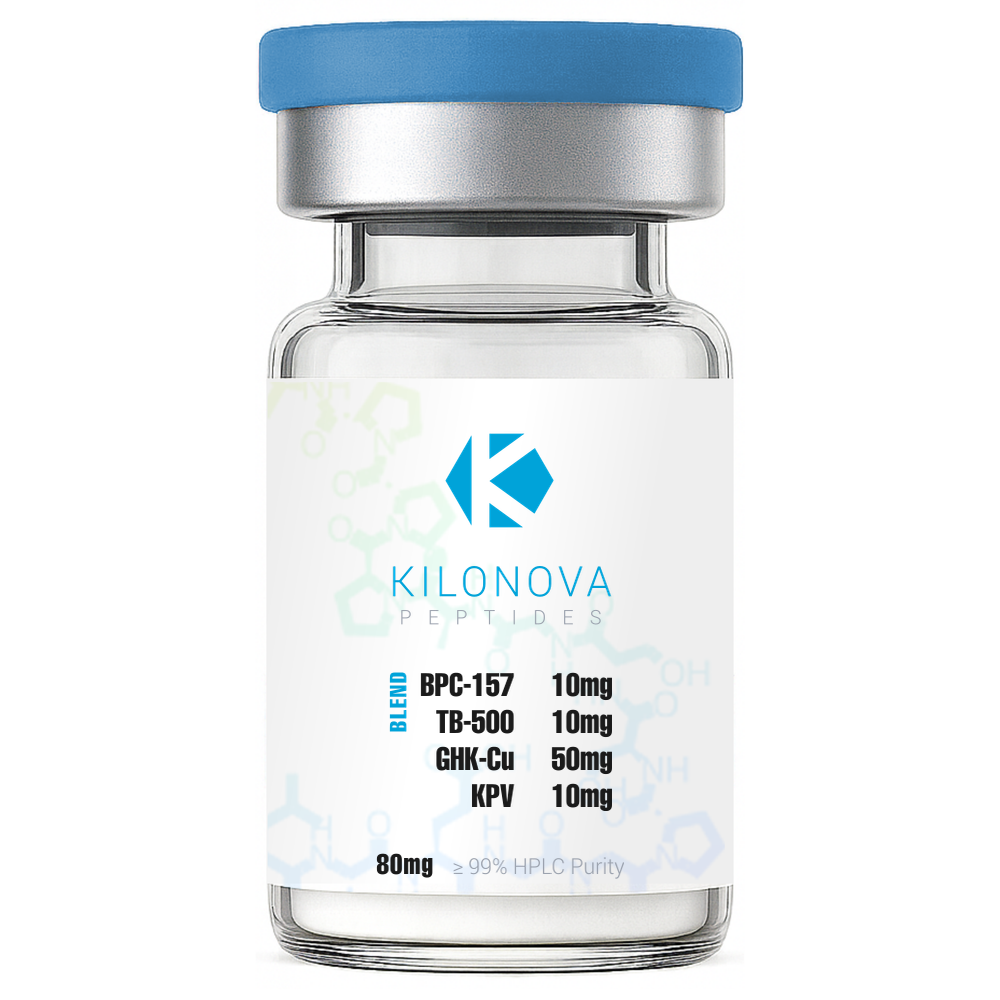
BPC-157 (Body Protection Compound-157) is a synthetic pentadecapeptide consisting of fifteen amino acids, originally derived from a protective protein isolated in human gastric juice [6]. With a molecular weight of approximately 1,419.56 Da [5], it belongs to a class of stable gastric peptides characterized by notable resistance to degradation in biological environments — a property that has made it a subject of sustained interest in preclinical research [1].
The compound's structural stability underlies its versatility across experimental models. Researchers have used BPC-157 to investigate a broad range of biological signaling contexts, including mucosal integrity, vascular dynamics, and growth factor modulation [4]. Its sequence has been registered in the ChEMBL database under identifier CHEMBL4297358, reflecting the degree to which it has been formally characterized at the molecular level [5].
In the laboratory setting, BPC-157 is frequently examined in the context of musculoskeletal and soft tissue models. Preclinical studies have explored its interactions with growth hormone receptor expression, angiogenic signaling, and inflammatory cytokine profiles in animal injury preparations involving tendon, ligament, muscle, and bone tissue [2][3]. Researchers have also used it to probe wound-healing mechanisms at the cellular level, including gene expression changes associated with tissue repair across multiple organ systems [4].
Beyond musculoskeletal contexts, published literature documents investigations into BPC-157's pleiotropic activity across preclinical models relevant to gastrointestinal and central nervous system physiology [1]. This breadth of experimental application has driven continued peer-reviewed interest and a growing body of patent literature surrounding the compound's mechanistic properties [1].
References
[1] Multifunctionality and Possible Medical Application of the BPC 157 Peptide-Literature and Patent Review. Pharmaceuticals (Basel, Switzerland), 2025. https://pubmed.ncbi.nlm.nih.gov/40005999/
[2] Emerging Use of BPC-157 in Orthopaedic Sports Medicine: A Systematic Review. HSS Journal: the musculoskeletal journal of Hospital for Special Surgery, 2025. https://pubmed.ncbi.nlm.nih.gov/40756949/
[3] Gastric pentadecapeptide body protection compound BPC 157 and its role in accelerating musculoskeletal soft tissue healing. Cell and Tissue Research, 2019. https://pubmed.ncbi.nlm.nih.gov/30915550/
[4] Stable Gastric Pentadecapeptide BPC 157 and Wound Healing. Frontiers in Pharmacology, 2021. https://pubmed.ncbi.nlm.nih.gov/34267654/
[5] BPC-157 (ChEMBL CHEMBL4297358). ChEMBL, European Bioinformatics Institute. https://www.ebi.ac.uk/chembl/compound_report_card/CHEMBL4297358/
[6] BPC-157. Wikipedia. https://en.wikipedia.org/wiki/BPC-157