Description
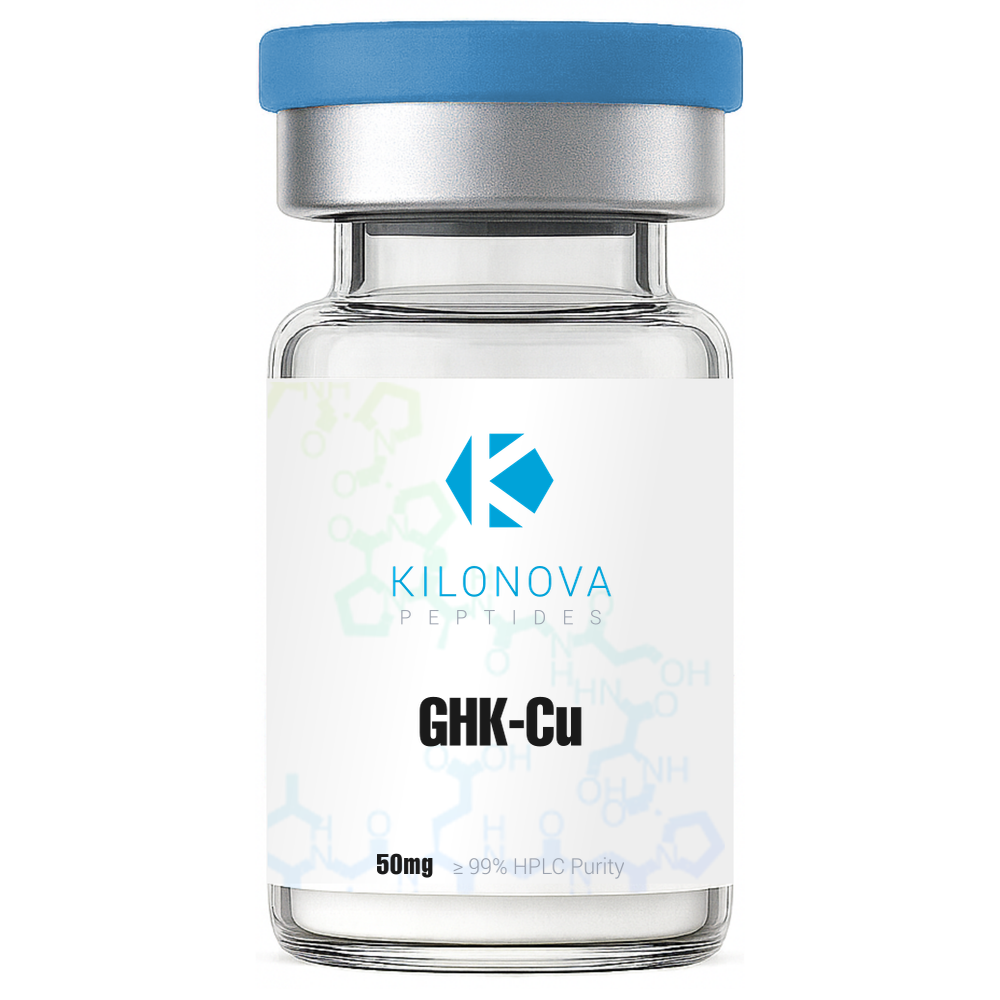
Glycyl-L-histidyl-L-lysine copper complex (GHK-Cu) is a naturally occurring tripeptide-copper chelate composed of three amino acid residues — glycine, L-histidine, and L-lysine — coordinated with a Cu²⁺ ion. The copper coordination is facilitated primarily through the imidazole nitrogen of histidine and the terminal amine of glycine, forming a stable square-planar complex that has made GHK-Cu a subject of sustained interest in biochemical research.
As a copper-binding tripeptide, GHK-Cu occupies a distinct chemical class at the intersection of metal-chelating peptides and endogenous signaling molecules. Its relatively small molecular weight and defined coordination geometry make it a tractable model compound for researchers investigating how copper speciation influences peptide conformation and reactivity in aqueous experimental systems.
Laboratory investigators employ GHK-Cu to probe a range of research questions, including copper-dependent biochemical interactions, peptide-mediated cell signaling, and the modulation of extracellular matrix–related pathways in controlled in vitro settings. Its well-characterized structure supports reproducible study of how tripeptide-metal complexes interact with cellular receptors, enzymatic targets, and structural proteins under defined experimental conditions.
Research-grade preparations of GHK-Cu are typically produced to stringent quality specifications — including endotoxin testing — to reduce confounding variables in cell-based assays and molecular signaling studies. These standards are considered essential when working in sensitive experimental protocols where trace contaminants could otherwise compromise data integrity.
References
No external sources were cited in this tab.